Abu Dhabi, United Arab Emirates

-
Our Location
-
Inquiries & Support
-
Connect
Contrary to popular belief, Lorem Ipsum is not simply random text. It has roots in a piece of classical Latin literature from 45 BC, making it over 2000 years old.
Abu Dhabi, United Arab Emirates
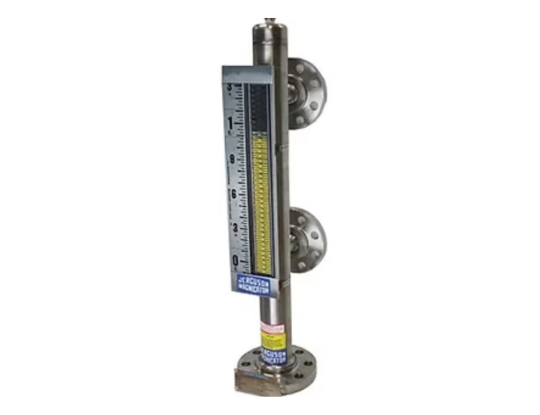
The Magnicator Indicator is connected to a process vessel. The chamber, or “column”,
contains a sealed float with a permanent magnet assembly which rises and falls as the
liquid level changes in the process vessel.
The permanent magnet assembly in the float is magnetically coupled to an indicator, which
is mounted externally to the gage column but completely isolated from the process liquid.
Indicator flags are rotated by the float magnet assembly as it moves up and down in the
chamber providing highly visible indication of where the level is inside of the vessel.
Magnetic Liquid Level Indicators are an attractive alternative to sight glasses for many
applications. They provide improved visibility, reduced maintenance, and eliminate leak
paths associated with sealing glass. Reducing leak paths is critical amongst many users
for flammable or toxic service.
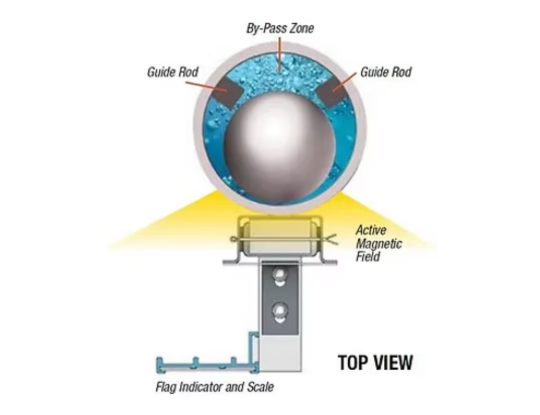
The Jerguson FlashProof design addresses two potential problems that may occur with
standard level indicators: boiling fluids and flashing vapors. By employing a larger
3″ Schedule 40 pipe and two internal guide rods, entrained gases that build up under
the float can harmlessly escape. The float is held to one side of the chamber to
insure an optimized magnetic field in close proximity to the indicator, transmitter
or switches. This provides an accurate float level and indicator reading.
The Jerguson FlashProof design also addresses problems caused by dirty or viscous
services. The use of an oversized 3″ Schedule 40 chamber creates additional space to
prevent the float from binding when dirt, sludge, or wax-like solids are present in
the process fluid. In a standard gage dirty service could potentially bind the float,
causing the level to appear unchanged.
Additionally, the bypass zone allows for the gage to be flushed without removing the
float from the column.
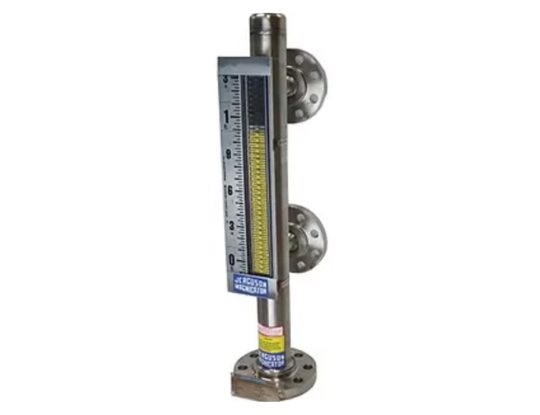
The Magnicator Indicator is connected to a process vessel. The chamber, or “column”,
contains a sealed float with a permanent magnet assembly which rises and falls as the
liquid level changes in the process vessel. The permanent magnet assembly in the float
is magnetically coupled to an indicator, which is mounted externally to the gage column
but completely isolated from the process liquid. Indicator flags are rotated by the float
magnet assembly as it moves up and down in the chamber providing highly visible indication
of where the level is inside of the vessel.
Magnetic Liquid Level Indicators are an attractive alternative to sight glasses for many
applications. They provide improved visibility, reduced maintenance, and eliminate leak paths
associated with sealing glass. Reducing leak paths is critical amongst many users for
flammable or toxic service.
By combining Guided Wave Radar (GWR) with a Magnetic Level Gage, the Magnicator Guided Wave
Radar (MGWR) brings a new standard of assurance to level indication.
The MGWR seamlessly integrates two independent level technologies off a single set of process
taps for true redundant measurement. The Jerguson Magnicator utilizes a wide indicator for
superior level visibility, and a unique magnet arrangement, so you never have to worry about
skipped or missed flags.
The GWR transmitter obtains an independent reading of the liquid level, providing an accurate
output even in the case of float failure. The GWR transmitter will read the true level of the
fluid even if the density of the product varies.

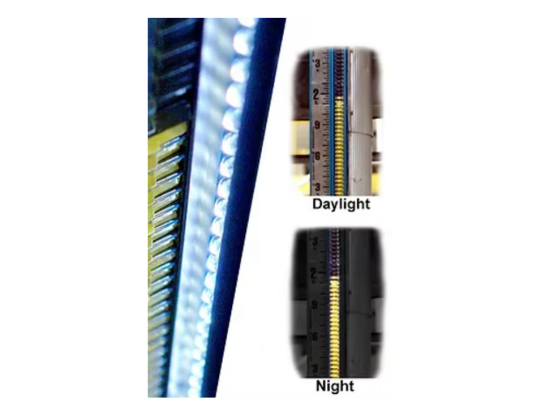
NightStar® Indicators for the Magnicator® make a level indicator continuously visible...
night or day with bright LED illumination. No more flashlight searches, no more spending
more time than needed in process areas.
NightStar Illuminators provide an array of bright LEDs to shine on standard mechanical
flag indicators. No light or low-light, the operator can easily and reliably verify level.
Jacket covers entire gage and includes drawcords at each end for closure. Provided with openings for gage process connections, indicator and switches or transmitters.

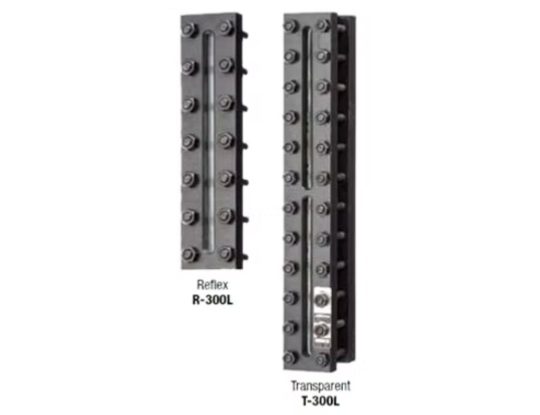
The Series 300L liquid level gage is a lower cost gage with increased visible ranges. The basic strategy was to provide more visible range per gage section at an economical price. This glass gage series uses the proprietary Jerguson 25mm glass, which is thinner, narrower and longer than traditional gage glass. The Series 300L features a recessed gasket surface, bar-stock non-shrouded covers and ASTM grade bolting. Due to the length of each gage section this model is not recommended for high pressure steam service.
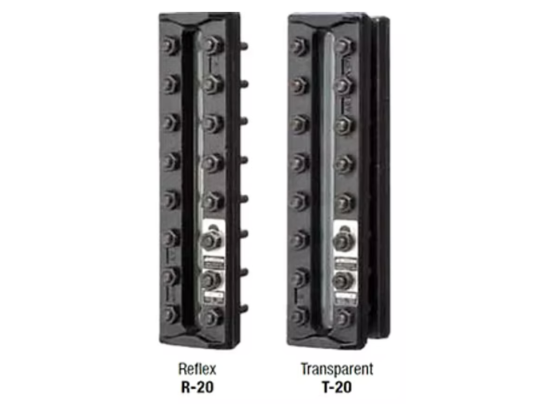
The Jerguson Series 20 Glass Gage is the most common gage produced and will cover 80-85%
of the applications encountered. Important features include a recessed gasket surface (standard
on all gage series) and shrouded covers. A recessed gasket surface provides positive location
of the seal gasket during both assembly and field repair and also makes it possible to repair
a Jerguson glass liquid level gage while it is mounted to the vessel.
The recessed gasket surface is also an important safety feature in the fact that it contains
the gasket and helps prevent lateral movement which could lead to a gasket blow-out (as with
competitive gages).
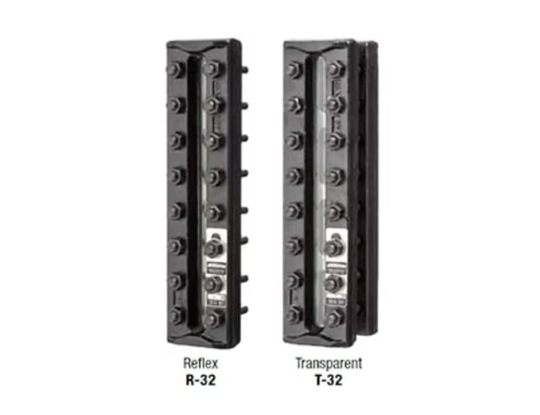
A Series 32 liquid level gage looks very similar to a Series 20, with the exception that the
Series 32 glass gage features mid-span supports or tie-bars to allow for increased pressure
ratings. Note that the mid-span support is recessed. This is very important as other brands
do not recess their mid-span support which causes a blind spot in the vision.
A recessed gasket surface provides positive location of the seal gasket during both assembly
and field repair and also makes it possible to repair a Jerguson gage while it is mounted to
the vessel. The recessed gasket surface is also an important safety feature in the fact that
it contains the gasket and helps prevent lateral movement which could lead to a gasket
blow-out (as with competitive gages).
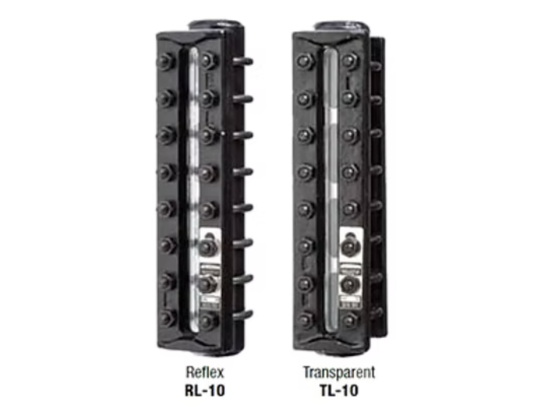
The Series 40 liquid level gage is used in high pressure process applications or process steam to 1500 PSI. Note that both reflex and transparent glass gages have plain (transparent) glass. A reflex glass gage may be difficult to read with a clear fluid as you will not see a silver/black contrast.

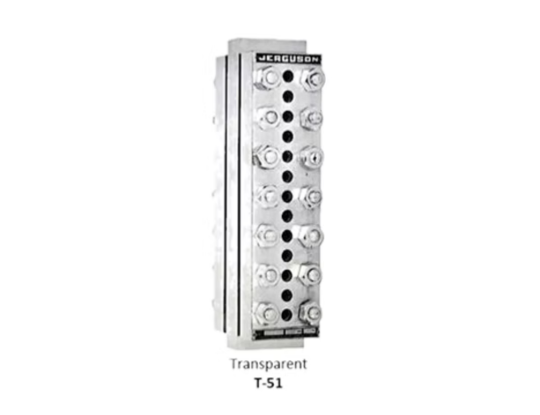
The Jerguson Series 51 Liquid Level Gage is a specially designed instrument capable of withstanding high pressures. The one-piece chamber is machined out of solid bar stock carbon steel or stainless steel as specified. It is drilled lengthwise and crosswise at each port leaving tie-bars in between to resist deflection under pressure. Viton® “O” rings that seal each port are unaffected by most liquids that cause deterioration in rubber. The “O” rings are seated in recessed circular channels to assure proper seating action.
Jerguson Large Chamber Liquid Level Gages are designed to give an accurate liquid
level reading of liquids that have a tendency to surge or boil. These glass gages are
highly effective in:
• reducing the boiling effects of entrained gas being released under low pressure,
• eliminating apparent level fluctuations that occur in standard gages (with small chambers)
when boiling / flashing vapors try to rise to the surface, and
• applications where the operating temperature is below freezing and high ambient temperatures
cause the temperature of the fluid in the gage to exceed the boiling point of the liquid.
In applications where the operating temperature is below freezing the gage must be equipped
with non-frost extensions.
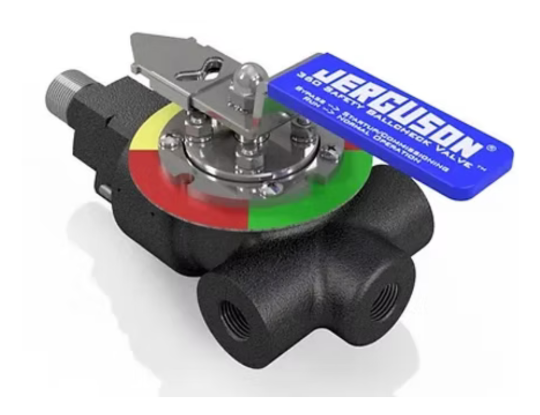
The Jerguson 360 Series valve is equipped with many features that elevate its performance above traditional style safety ballcheck valves. Designed to alleviate a widespread problem, the 360 Series’ bypass mode seeks to remove guess work or operator error during commissioning. The quarter turn position — visible handle provides clear operation status and a locking pin to secure its position.
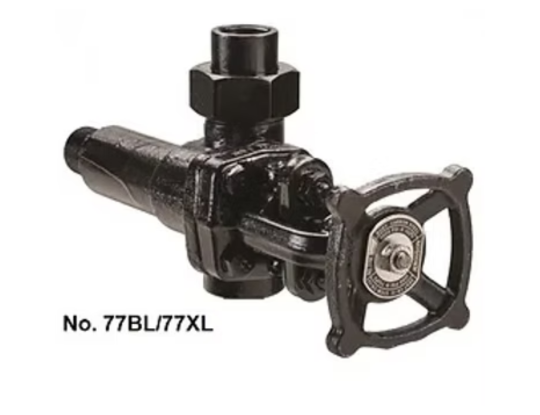
Jerguson No. 70BL and 70XL Series Valves are designed for use with flat glass gages,
instrument piping and for other applications requiring a rugged, lightweight valve.
Pressure and temperature ratings to 600 lb. ANSI flange standards or manufacturer’s ratings.
Jerguson No. 70BL and 70XL Series Valves are designed for use with flat glass gages,
instrument piping and for other applications requiring a rugged, lightweight valve.
Pressure and temperature ratings to 600 lb. ANSI flange standards or manufacturer’s ratings.
Jerguson® No. 60LE Series Valves are constructed to the highest of standards. The updated design removes the stem threads from contact with the process fluid by locating them behind the valve packing seal. This important feature prevents corrosion on the threading and provides a barrier inhibiting the ability of particulate to interfere with the hand wheel operation. The valve is low emission certified to API 624 to provide compliance with EPA standards. Quality features include stainless steel stems, seats, and ballcheck, regrindable and renewable seats.
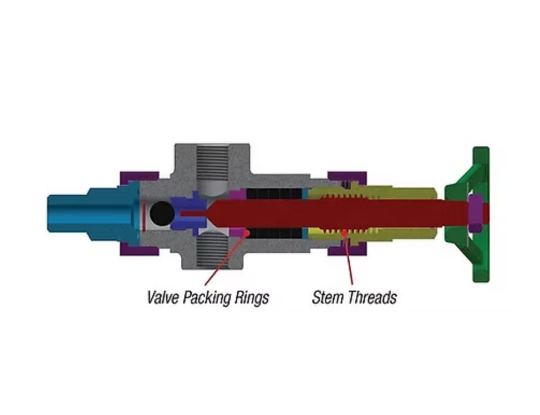
Jerguson No. 60 Series Valves are designed and built to the highest standards. Quality features include stainless steel stems, seats, and ballcheck, along with regrindable and renewable seats. A wide selection of optional features permits a high degree of customizing to meet very specific demands.

Jerguson No. 140 Series Valves provide long trouble-free service at economical cost. Their design incorporates such quality features as stainless steel stems and ballchecks. A comprehensive selection of connections provides the versatility required to conform to most piping requirements. Optional features permit a high degree of customization to meet very specific demands.
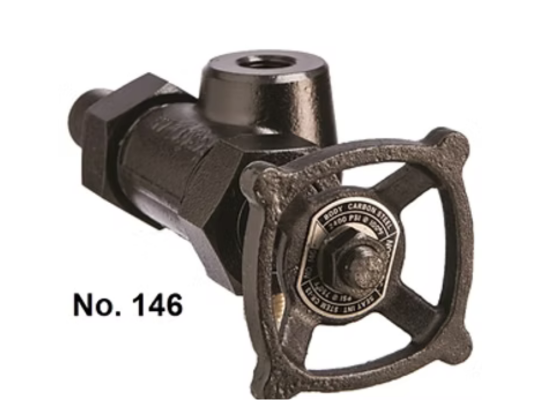
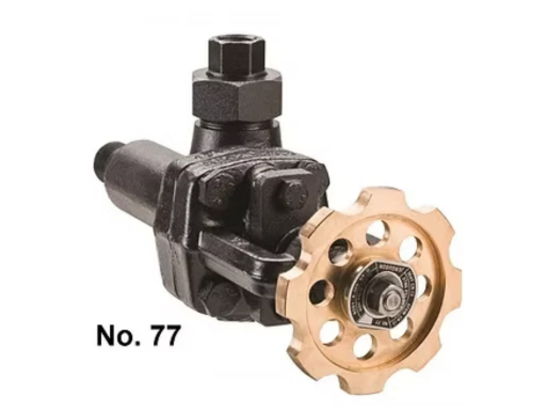
Jerguson No. 70 Series Valves are designed for use with flat glass gages, instrument piping and for other applications requiring a rugged valve. Pressure and temperature ratings to 900 lb. ANSI flange standards or manufacturer’s ratings.
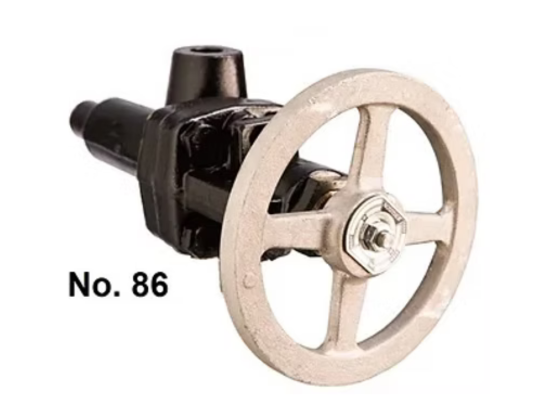
Standard construction with a spiral wound gasket between bonnet and body is rated at
6,000 PSI and 100°F. When a Viton “O” ring is used (No. 86-HO or 86-VO) in place of the
spiral wound gasket, this valve is suitable for pressure up to 10,000 PSI at 400°F.
It is designed specifically to be compatible with Jerguson’s 10,000 PSI Series 51 Flat
Glass Gage.
OS&Y construction provides a steel yoke which supports the stem away from the body of the
valve. The threads are thus outside the valve body and do not come in contact with process
media. No. 86 Valves are available with male socket weld or flanged tank connections only.
The two outlet connections for gage and drain are 1/2″ N.P.T. on 86H and 86V, and 1/2″ socket
weld on 86HO and 86VO — unless otherwise specified.
Jerguson No. 90 Series Valves are designed especially for use with heated or cooled gages. A jacket surrounding the valve permits circulation of the heating or cooling medium. Four 1/4″ holes are tapped into the jacket for connection to the heating-cooling supply and/or tracing tube.
Convertible to Quick Closing: Plain closing threads and handwheels are
standard. Quick-closing valves, stems and levers for chain operation can be furnished
upon request at no extra cost. These stems have quadruple thread for full closing or
opening in 1/4″ turn. Valves can be converted at any time by replacement of stem and sleeve.
Regrindable, Renewable Seat: Union sleeve bonnet construction permits
regrinding of valve seat. Valve seat may be renewed by removing the seat with a standard wrench.

Jerguson Gage & Valve offers a complete line of brass, bronze and stainless steel
tubular glass gage valves for economical service. The standard straight-through
flow design features a durable cast aluminum wheel. Connections of 1/2 or 3/4 inch
NPT are available for attaching the valve to the vessel.
Highly durable Pyrex® gage glass is available with outside diameters of 5/8 or 3/4 inch.
Visibility lengths vary as required. Guard rods are recommended to protect the glass
from damage, and for added safety.
These tubular glass gage cocks represent years of experience in the manufacture of gage cocks and offer a variety of types of connections to suit all requirements. All have steel bodies with stainless steel trim.
Maximum working pressure dependent on length and resultant pressure rating of glass. See table at bottom of this page.

The JMT™ Series Magnetostrictive Transmitter is a cosmic leap forward in features and
versatility. Utilizing Jerguson’s patent pending signal capture technology, the JMT
features unsurpassed signal to noise ratio. When installed with the Jerguson Magnicator®’s
unique magnetic field, the JMT can be mounted on almost any chamber combination, including
Schedule 160, without sacrificing reliability.
The dual-entry enclosure allows for safe access to the HMI where information can be had
with a single touch of the button, including current level information, settings, and a
LIVE graph showing the real-time waveform.
The JMT is designed to work and be fully configurable with generic HART®. Every aspect
of the JMT has been developed for ease of installation, setup, and connectivity. Just like
our wide range of reliable flag indicators, floats, and switches, the JMT adds continuous
level control you can trust from Jerguson.
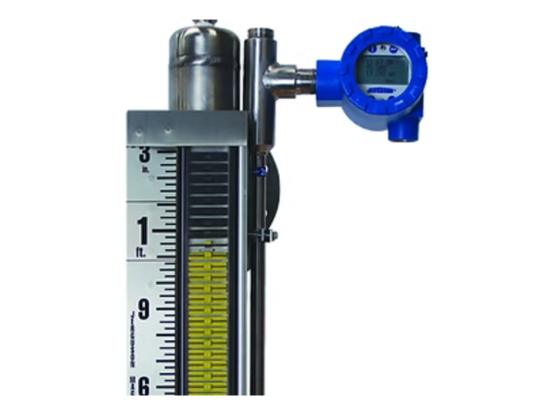
The MTII4300 precisely senses the position of the Magnicator float by applying a short 1.5μs pulse to the sensing element. This pulse creates a magnetic field around the sensing element. When the float’s magnetic field and the sensing element’s magnetic field intersect, a twist occurs in the sensing element. Based on the time between the initial pulse and the detection of the corresponding twist, the location of the float magnet can be precisely calculated.

The RST2 sensor is a chain of magnetic reed switches and resistors mounted within a
heavy wall stainless steel tubing assembly. As the float within the Magnicator responds
to liquid level change in the chamber, the float actuates adjacent reed switches.
The reed switch and resistors provide a varying resistance output.
It is this output that is measured by the RST2 electronics module, as an indication
of liquid level. The RST2 transmitter will provide a 4–20 mA signal proportional to
the liquid level indicated by the Magnicator.
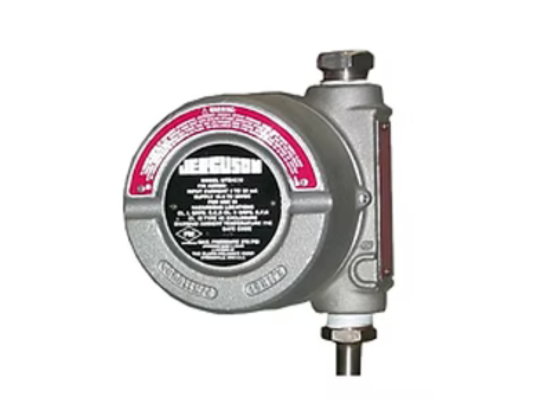
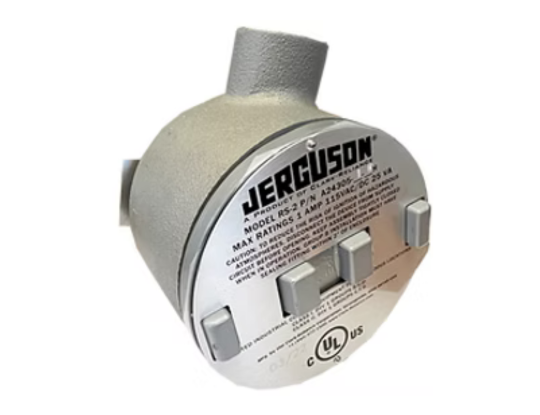
The switch mechanism is based on a unique Jerguson tri-magnet design where the snap
action is accomplished by the utilization of magnetic repulsion. The magnet mounted
in the float causes the secondary magnet to rotate as it passes up and down.
The switch magnet is repelled by the secondary and snaps to the opposite side. This
causes the cradle to pivot, moving the push rod which operates the switch contacts.
The result is positive snap-action interlock switching – no springs… no cams… no problems.
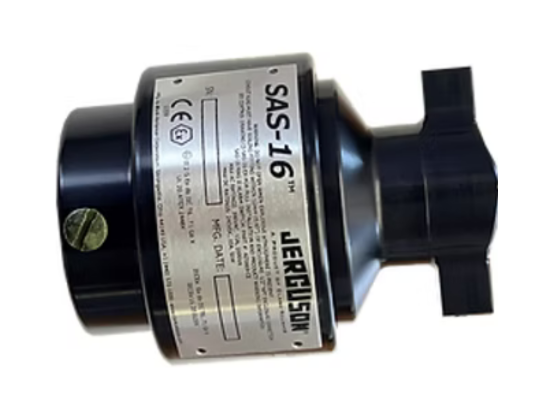
This simple reed switch device can be used to directly control low-amp equipment, or as an input to user supplied controllers or DCS systems. Available with either SPDT or DPDT action.