Abu Dhabi, United Arab Emirates

-
Our Location
-
Inquiries & Support
-
Connect
Contrary to popular belief, Lorem Ipsum is not simply random text. It has roots in a piece of classical Latin literature from 45 BC, making it over 2000 years old.
Abu Dhabi, United Arab Emirates
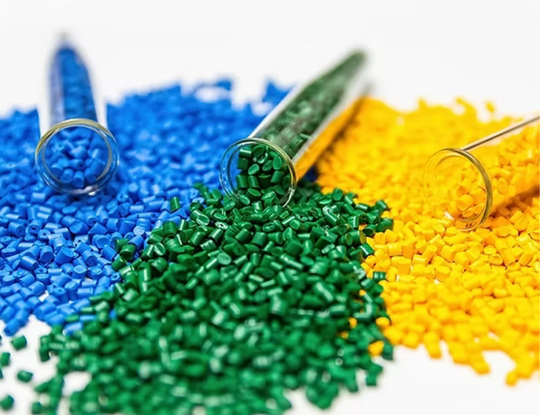
The mass production of plastics began in 1950 and has since increased almost
exponentially. In 1950, global plastic production was 1.7 million tons per year,
and by 2014 it had reached 311 million tons annually. Plastic is lightweight,
durable, inexpensive, and easy to mold, which is why its usage grew rapidly
and continues to expand. Plastics are widely used in everyday life — almost
everywhere you look, you will find something made of plastic. As new uses for
plastic materials have developed and products have become more accessible,
the amount of plastic entering the environment has also increased.
Plastic consists of polymers, which are large organic molecules made of repeating
carbon-based units or chains. Polymers are formed when molecules called monomers
join together in a process known as polymerization. Monomers act as the building
blocks of polymers.
A polymer made from identical repeating monomers is called a homopolymer, while a
polymer made from different types of monomers is called a copolymer. The type of
monomers used determines the polymer’s fundamental properties, structure, and size.
Understanding the specific gravities of plastics is important when considering how
plastic waste distributes in the ocean. The density of plastic particles relative
to seawater largely determines their vertical position within the marine
environment.